Unit 10- Film production
Task 1- research
Film genres and conventions:
Conventions of horror:
The mise-en-scene in horror tends to be dark, rural deserted locations, places that are abandoned and isolated. Props include weapons such as knives, axes and chainsaws as well as supernatural features such as castles, graveyards and haunted houses. This creates mystery and suspicion around the film. The colours tend to be blacks, reds and brown and these connote to the possible danger, blood or evilness.
The cinematography includes different shot types; many horrors use to close-ups to emphasise a characters scared emotions or extreme wide shots to create isolation and distance from a character. Horror uses unique and unusual angles to create confusion and unsettling feel with the viewer. The lighting tends to be dark, underexposed with lots of shadows, making the audience feel tense and on edge.
Examples of Horror Movies:

Don't Breathe

Get out

Watcher
Conventions of Romance films:
Romantic films often explore the essential themes of love at first sight young and mature love, unrequited love, obsession, sentimental love, spiritual love, forbidden love, platonic love, sexual and passionate love, sacrificial love, explosive and destructive love, and tragic love. Romantic films serve as great escapes and fantasies for viewers, especially if the two leads finally overcome their difficulties, declare their love, and experience their "happily ever after", often implied by a reunion and final kiss. In romantic television series, the development of such romantic relationships may play out over many episodes or different characters may become intertwined in different romantic arcs.
Examples of romance films:

The perfect match

The love note

Titanic
Conventions of Sci-fi films:
The conventions that make science fiction identifiable as a genre are elements and ideas that are not possible within our current society. These things could include robots, flying cars, time travel, androids, aliens and much more.
The setting for most science fiction films is usually a technologically advanced society. This setting can be dystopian or very flawed depending on the story.
Science fiction films focus heavily on the themes and ideas of morality and what is wrong and right in relation to advanced science. Many of these films explore the conflict between old and new ideas and ways of living, and there is often a strong social commentary throughout. Films like Blade Runner, RoboCop and Alien all explore the dangers of intelligent lifeforms and technology and explore the consequences of our own scientific curiosity.
Examples of Sci-fi films

The Creator

Star Wars: The Last Jedi

Tron legacy
Conventions of action films:
Action films are usually characterised by fast-paced, high intensity plots. These films often involve lots of chases, stunts, and face off scenes involving violence. Fight scenes are a major element in action films, with intense shoot-outs, martial arts battles and other fighting occurring throughout the plot.
Action films focus on a powerful, highly skilled protagonist who is fighting against an antagonist. The antagonised can be an evil organisation, or it can be an individual who is a direct rival of the main character. The conventions of this genre include conflict, use of weapons, power struggles and a battle between good and evil. Action films can be more realistic and involve war or the military, or they can focus on more fictional ideas like spies, hitmen, and extravagant heists.
Examples of action films:
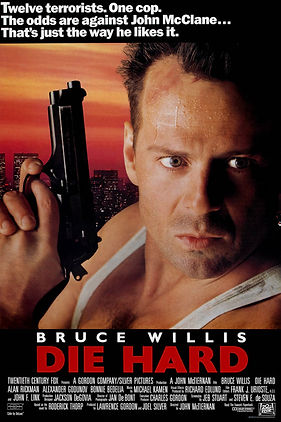
Die hard

Avengers endgame

The batman
Narrative devices:
-
Enigma codes- Used to slowly reveal the narrative, includes important information to be solved.
-
Linear- Where scenes take place in chronological order.
-
Non-linear- Where scenes take place in a non-chronological order
-
Multi-strand narratives- Lots of different plots and narratives are weaved into each other.
-
Episodic drama- The story consists of many different stand-alone stories.
-
Series narrative- episodes or films that are told through the use of story
-
Flexi narrative- Used to merge the same characteristics of similar films or series.
-
Unrestricted narration- The audience knows more information that the characters do.
-
Restricted narration- Where the audience knows no more information than the characters do
Theoretical concepts- Romance
Semiotics- The common denotations of romance are the passionate relationships, the true love and commitment of a relationship.
The common connotations of romance are hearts, love, cupid and valentines.
Narratology- Romance films follow a basic 4-part structure- the main characters meeting each other for the first time, Them loosing each other in some way, getting back through a form of contact and then reuniting back into a relationship with each other.
Structuralism- Complete opposites in romance films are love vs hate, rich vs poor and youth vs maturity
Genre- Romance films follow the same scenes and plots- two lovers meeting each other and forming a passionate bond with one another, with the ending of the film being them either still together or being apart.
Theoretical concepts- Sci-Fi
Semiotics- Denotations of Sci-Fi are lots of elements of science fiction- this might be in the form of planets in outer space, aliens, etc. The connotations that match this are planets, aliens and lots of futuristic ideas.
Narratology- The narrative structure of sci-fi films follow Todorov's five scene structure- equilibrium, disruption, recognition, resolution and new equilibrium.
Structuralism- The opposites within sci-fi films include Human vs a.i, nature vs technology and individual vs collective.
Genre- The repetitions that may be included within sci-fi films are how characters end up traveling across to different dimensions or planets, collecting resources and defeating outer world enemies.


Film analysis:
Jaws
Jaws is a 1975 American thriller film directed by Steven Spielberg, based on the 1974 novel by Peter Benchley. It stars Roy Scheider as police chief Martin Brody, who, with the help of a marine biologist and and a professional shark hunter hunts down a man-eating great white shark that attacks beachgoers at a summer resort town.
Jaws- mise en scene
-Characters: The shark and Martin Brody ( Roy Sheider)
-Costumes: Martin Brody's black T-shirt and jeans, holding a gun on his shoulder
-Props: Spear in hand, gun on shoulder
-Lighting: natural lighting, no filters used

Film analysis- IT
IT is a 2017 horror film Directed by Andy Muschetti adapted from Steven King's 1986 novel. The movie is set in Derry, Maine tells the story of the losers club in which a group of seven outcast children who are terrorised by the eponymous being that emerges from the sewer, only to face their own personal demons in the process. Throughout the film there is a mixture of different lighting to affect the mood allowing the audience to feel a range of emotions throughout.
Jaws mise-en-scene

Characters-
-Richie Tozier
-Bill Denbrough
-Beverly Marsh
-Ben Hanscom
Costumes-
-Dress
-Shirt
-Jeans
-Trainers
-Boots
Props-
-Flashlight
-flamethrower
-Stick
Jaws & IT comparison
Jaws and IT are both films that follow the horror genre. The Similarities between them are the stylistic use of music throughout and the camera techniques used. Because the two film are from different times, the props used are different and the costumes worn by the characters are different. The way the film are set up are both similar and different with their storylines and both include a main character that goes through a journey throughout.
Pre & post production documents


Unit 10 film- Split
Unit 10 Film- evaluation
